











Creating a Culture of Innovation in the Era of Digital Disruption
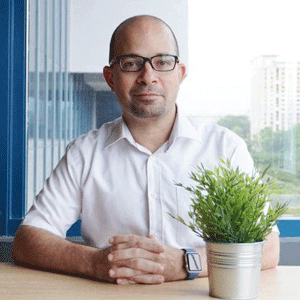
Jonathan Falconer, Director, Harvey Nash Executive Search Japan

Jonathan Falconer, Director, Harvey Nash Executive Search Japan
As tracked over the years by the annual Harvey Nash CIO survey, the largest IT leadership survey in the world, it is clear that the pace of innovation and digital disruption is dominating the agenda of technology leaders. New technologies (such as Internet of Things, including wearables, Industry 4.0 and AGI) and business model game changers, such as Uber and Netflix are disrupting industries at an unprecedented rate. This year’s Harvey Nash/KPMG CIO survey findings revealed that the majority of APAC CIOs (44 percent) feel better equipped than their global counterparts (41 percent) to keep up with the pace of change, but this still represents less than half feeling confident about their current capabilities. There are some regions, such as Japan, that report they are suffering from a major innovation gap (72 percent) and are lagging behind global counterparts as a result.
Pushing the Boundaries – Embracing Innovation
We are entering the Fourth Industrial Revolution and the role of the CIO has never been more relevant or influential. According to the Harvey Nash/KPMG Survey, the “Creative CIO” role has emerged and many technology leaders are now rising to the challenge of leading their organisations through this disruption as both a business and technology strategist. More CIOs globally report directly to the CEO (34 percent) than at any time in the past decade, rising 10 percent over the last year. 72 percent of CIOs across APAC feel they are becoming more strategic in their organisations and 52 percent plan to increase the budget –all positive news for CIOs.
Creating a Culture of Innovation
- Top Tier Support– Starting with the CEO
CEOs face many priorities that may crowd out innovation. Therefore CIOs need to act as the driving force to move the digital business and vision forward. CIOs need to be seen as strategic partners with the CEO and be given the right resources and support. The 2016 survey reveals CIO priorities continue to shift - the focus is now on IT projects that make money (almost two thirds, 69 percent), enabling CIOs to be more creative and increase their strategic influence.
- Create a Work Culture that Nurtures Innovation
Companies need to embed innovation as part of their DNA. They need to provide sufficient resources (including innovation / R&D centres) to transform culture and give tech leaders the freedom to fail, but fail fast. Innovation and creativity need to be actively encouraged throughout the organisation, not just from a top down perspective.
- Involvement in Wider Initiatives
Many governments and organisations are working hard to promote the power of innovation and develop the IT community. For example; the Hong Kong government’s CIO is currently focused on developing Hong Kong’s talent pool by engaging businesses in offering internships and industry-led IT training to students. Singapore is committed to becoming a digital hub and Vietnam is known for its start-up ecosystem. CIOs have the opportunity to not only engage in wider initiatives but to adopt industry best practice and identify the top and most creative talent.
- Incubating Talent
As the survey indicates, we are facing the greatest tech skills shortage since the 2008 global financial crisis. In APAC over two-thirds (69 percent) of CIOs say they believe a lack of talent will prevent their organisations form keeping up with the pace of change, in particular Japan’s CIOs are the most concerned with skills gap globally. Data analytics is the most in-demand skill, followed by digital and cyber security; and with 47 percent of APAC CIOs planning to increase their headcount over the coming year, the battle for the top IT talent looks to intensify further.As a result companies are faced with a choice – either be prepared to fight it out for the top talent externally, make smart acquisitions to hire in the talent needed, or invest in incubating talent internally.
The survey confirms now more than ever, CIOs and IT leaders need to be strategic partners with the CEO. APAC CIOs are increasingly focused on innovation and change and their roles are being stretched in many directions. The biggest challenge for CIOs is to be flexible, adaptable and have a clear business strategy and model that can be adapted to the disruptive digital future.

